Liu Yiushui converts to Christianity
Surprised by JoyC. S. Lewis’s conversion to Christianity completed a sequence of changes that his memoir carefully distinguishes: childhood belief, apostasy, surrender to theism, and finally acceptance of the Incarnation. Its decisive moment came on a journey to Whipsnade, but the conviction reached there had been prepared by years of religious practice, intellectual conflict, and reconsideration of myth. Lewis presents conversion not as a return to the faith he had once lost, but as the recognition that Christianity brought religious history to maturity and that God had become present in a uniquely concrete form.
From early faith to apostasy
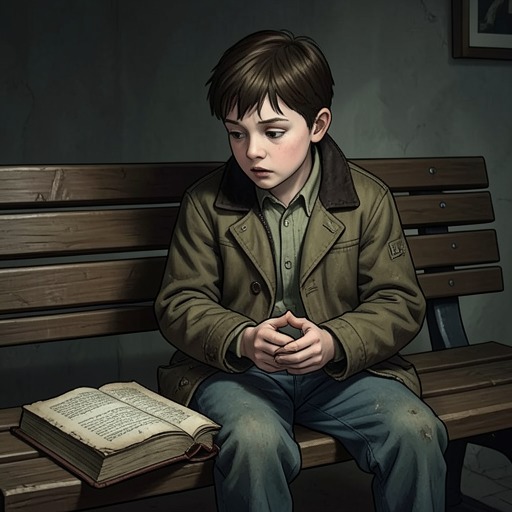
At Oldie’s school, Lewis first became an effective believer. The boys attended an Anglo-Catholic church twice each Sunday. Its candles, incense, vestments, and hymns sung on their knees initially struck him as unfamiliar English customs, yet the doctrines mattered more: he heard Christianity taught by men who plainly believed it. Because he had not been skeptical, their teaching brought to life what he had already said he believed. Fear formed part of this early faith. On blazing, moonlit nights in a curtainless dormitory, hearing other boys breathing in their sleep, he worried about his soul. He began to pray seriously, read the Bible, and try to obey his conscience. In retrospect, he regarded this fear as neither excessive nor harmful, and recalled religious discussions at school as grave, healthy, and free of hysteria.
That beginning did not last. At a later school, a demanding standard for prayer turned religious practice into a nightly ordeal. Lewis tried to ensure that every clause of a prayer was accompanied by a vivid realization of imagination and feeling. He attempted by willpower to produce an experience that could not be summoned at will, and could never be confidently measured. The effort threatened to become an infinite regress: even the preliminary prayer for a realization might itself need to be realized. Night after night, cold oilcloth, chiming quarters, and the hours slipping away accompanied his struggle to force the desired state. The exhaustion made him dread bedtime and cast gloom over the whole evening. Lewis later identified this burden of false duties as an unconscious motive for wanting to leave Christianity.
Other doubts came through his education. Reading classical literature, especially Virgil, exposed him to religious ideas that teachers and editors treated as illusions. Lewis saw no account of how Christianity might fulfill Paganism or how Paganism might foreshadow Christianity. Instead, religion seemed to be a natural human growth, a widespread error with Christianity inexplicably exempted as true. He wondered why his own religion should be treated differently from the rest, and was ready to stop treating it differently. His growing intellectual pessimism reinforced the doubt: though he was not unhappy, he had come to regard the universe as, on the whole, regrettable. Occult interests and the argument from undesign also worked against Christianity, even though he did not reconcile them into a single logical system. They influenced him in different moods but shared their opposition to Christian belief. Gradually, with fluctuations he could not later reconstruct, he became an apostate, feeling relief rather than loss.
The return of religious possibility
Lewis’s later interest in non-Christian religious thought reopened questions that materialism had seemed to settle. The poet W. B. Yeats stood apart from other writers Lewis was reading because he treated the supernatural as real: his account of beings beyond the material world was a serious belief, not poetic invention or wishful thinking. Lewis had relied on what he understood as scientific findings, which he had to accept on authority; Yeats confronted him with a competing authority. Since Lewis did not regard Yeats as a Christian whose testimony he could dismiss, he had to consider that a responsible, learned writer might reject materialism. Reading Maeterlinck then introduced him to Spiritualism, Theosophy, and Pantheism. Lewis did not assent to these claims outright, but the possibility that something existed beyond the material world disturbed his confidence in materialism and revived the occult ideas that had once excited him.
His debates with Owen Barfield further unsettled his intellectual framework. Barfield’s arguments against chronological snobbery—the assumption that a belief is discredited simply because it is out of date—made Lewis ask whether older ideas had actually been refuted or had merely fallen out of fashion. That test also turned back on the present: the intellectual assumptions most deeply embedded in an age may be precisely those it least thinks to defend. Barfield also challenged the position Lewis had shared with his friends, that the sensory universe was the foundation of reality while abstract thought, moral judgment, and aesthetic experience nevertheless possessed genuine authority. Lewis came to see that this combination was inconsistent. If thought were merely subjective, the claims made for logic, ethics, and aesthetics could not stand; a strictly materialist account would require a behaviorist explanation of them, an alternative Lewis found literally impossible to believe. He therefore gave up realism and accepted that mind could not be a late by-product of an otherwise self-sufficient material universe. These debates did not make him an Anthroposophist, but they helped make his inherited materialism untenable.
Surrender to theism
The move from intellectual change to religious commitment was not comfortable. Lewis had wanted above all to avoid interference and suffering, and to preserve the sense that his soul was his own. Even when trying to live by a philosophy, he had quietly assumed that its demands would not become intolerably painful. Theism removed that protection: God’s reality could not be negotiated into a convenient agreement. Lewis describes the demand as absolute surrender, not a limited compromise. In 1929, alone in his room at Magdalen night after night, he felt the approach of the God he earnestly wished not to meet. In Trinity Term, he gave in, acknowledged that God was God, knelt, and prayed. He later described himself as perhaps the most dejected and reluctant convert in England.
This conversion was to theism, not yet to Christianity. Lewis knew nothing of the Incarnation, and the God to whom he surrendered was, as he understood Him then, wholly nonhuman. Nor did Lewis’s first belief in God include belief in an afterlife. He considered it a mercy that for months, perhaps a year, he could know God and attempt obedience without making immortality the focus. He had believed that goodness counted as goodness only when disinterested, and worried that the hope of reward or fear of punishment would corrupt moral action. Thus his surrender did not immediately resolve every theological question; it established a new relation to God before settling what that relation meant for Christian doctrine, future life, or religious institutions.
From religious history to the Incarnation
Lewis’s churchgoing at this stage was provisional and symbolic. He disliked the Church’s collective character, its crowds, bells, umbrellas, notices, and organization, and found hymns and the organ disagreeable. His own inclination was toward solitary prayer and small conversations about spiritual matters, not participation in rites. He could not say that churchgoing itself had moved him toward Christianity. His close companion in this period was Dom Bede Griffiths, with whom he maintained a substantial correspondence. Both believed in God and were prepared to hear about Him from Pagan or Christian sources.
The question Lewis asked about religion had changed. He was no longer trying to identify one true religion among a thousand false ones. Pagan worshippers, he now thought, had recognized something real; the issue was where religion had reached maturity and where the hints of Paganism had been fulfilled. The answer, as he framed it, narrowed to Hinduism or Christianity. Hinduism seemed to him to combine philosophical reflection with forms of Pagan practice he judged morally unpurged, and he found no comparable historical claim in it. Christianity, by contrast, joined what he took to be the historical character of the Gospels with the substance of myth. He could not read the Gospels as myths, yet their apparently artless record presented a figure unlike anyone else in literature: recognizably human and historically particular, but also numinous. If this figure was divine, Lewis reasoned, then in a monotheistic faith He was not one god among many but God. His emerging interpretation was that the myth had become fact: the Word had become flesh, and God had become Man. Christianity was therefore not merely one religion or philosophy among others, but their fulfillment and actuality.
Lewis acknowledges some uncertainty about the precise order in which these thoughts developed, and allows that parts of his later account may include ideas that came to him afterward. He is more certain about the resistance that met the final doctrinal step. Moving from the Absolute to Spirit, and from Spirit to God, had already brought reality nearer and made it more demanding. Acceptance of the Incarnation brought God closer in a new way, and that was exactly what Lewis had not wanted. Yet once he recognized that his reluctance arose from a desire to evade God’s claims, he also saw its shame and futility.
The journey to Whipsnade and its significance
Lewis locates his acceptance of Christ on a journey to Whipsnade. On setting out one sunny morning, he did not believe that Jesus Christ was the Son of God; on arriving at the zoo, he did. He says the journey was not spent in deliberate thought or intense emotion. The change felt instead like the quiet recognition, after a long sleep, that one is awake. As with an earlier turning point in his religious life, the moment left him unable to settle neatly whether the change was freedom or necessity. Lewis suggests that at the furthest limit those terms may converge: a person is wholly present in the act, with no self held back outside it.
At Whipsnade, Wallaby Wood—with birds overhead, bluebells underfoot, and wallabies moving around him—seemed to Lewis almost like Eden restored. Yet his retrospective emphasis falls less on a lasting emotional transport than on the altered meaning of his earlier experience of Joy. He says that the old, bittersweet longing continued to come to him after conversion, sometimes as sharply as before. What changed was his understanding of its importance: Joy, considered as a state of his own mind, had never been the destination. It mattered as a pointer to something beyond and outside himself. Once the road had been found, the signpost no longer needed to command the attention it had received in the wilderness. The conversion therefore completes the movement of the memoir’s religious story: Lewis does not claim that Christian belief erased earlier longing, but that it redirected his attention from the experience toward the reality he believed it indicated.